
By Francois Mouflin, NASM-Certified Personal Trainer & Founder of Focus Camp
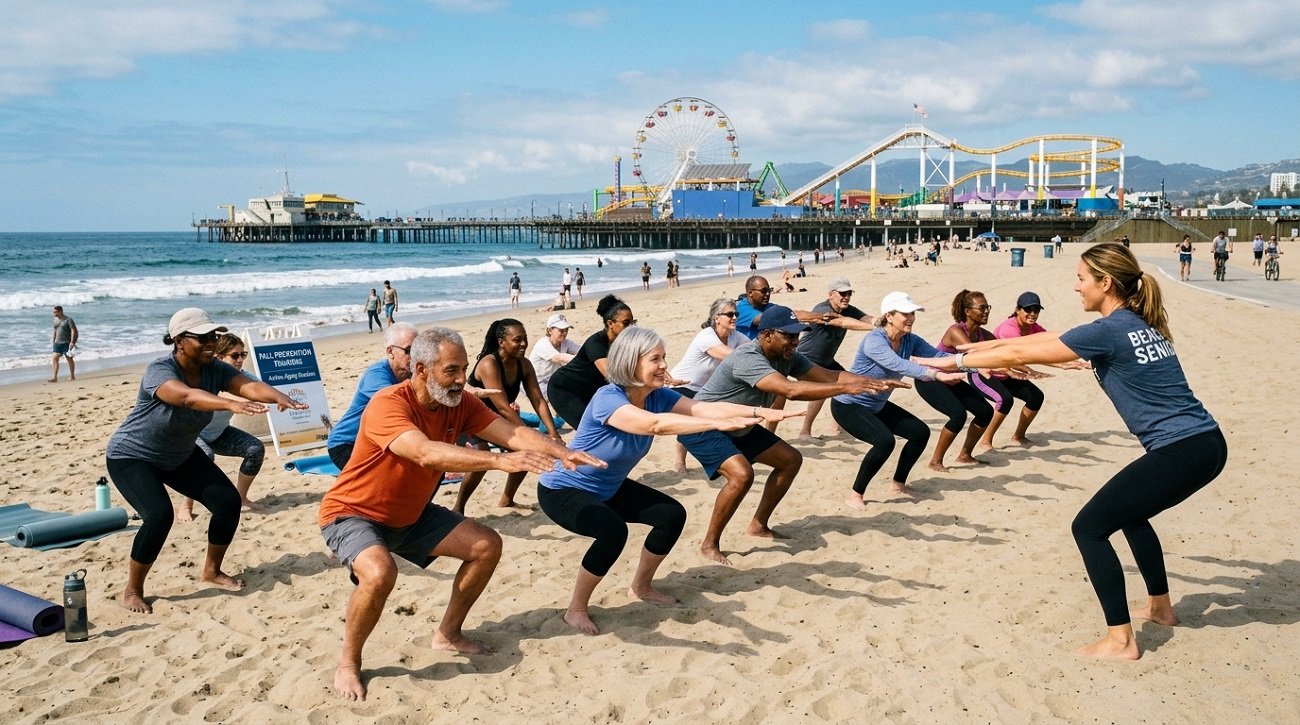
Table of Contents
You’re walking along the beach path in Santa Monica, enjoying the morning sun, when your foot catches on an uneven patch of pavement. In an instant, your balance wavers—heart pounding, arms flailing—and for a terrifying moment, you’re not sure if you’ll catch yourself. For many adults over 50 in Los Angeles, this scenario isn’t just a hypothetical fear. It’s a real concern that limits daily activities and steals confidence. At Focus Camp, we’ve seen how the right training approach can transform this anxiety into assurance. Our fall prevention exercises for seniors Los Angeles program combines outdoor functional training with expert coaching to address the specific balance, strength, and mobility challenges that come with aging. After reading this article, you’ll understand exactly why functional group training is more effective than traditional gym workouts for preventing falls, which exercises are most beneficial for adults over 50, and how you can get started with our proven program in Los Angeles.
Understanding Fall Risks for Adults Over 50 in Los Angeles
Falls happen fast. One moment you’re walking, and the next you’re on the ground, wondering what went wrong.
Age-Related Physical Changes That Increase Fall Risk
As we age, our bodies naturally undergo changes that can affect balance and stability. Muscle mass tends to decrease, particularly in the lower body, which can lead to weakness in the legs and core. Vision changes, including reduced depth perception and sensitivity to glare, can make it harder to navigate uneven terrain. Reaction times slow, and proprioception—the body’s ability to sense where it is in space—becomes less acute. These changes don’t mean falls are inevitable, but they do mean we need to be proactive about training our bodies to compensate.
You might be wondering if this applies to you. Here’s the simple test: have you caught yourself stumbling on uneven pavement in the last six months? If yes, keep reading.
Environmental Factors Specific to Los Angeles Living
Living in Los Angeles presents unique environmental challenges. Our beautiful beaches have uneven paths and sand that shifts underfoot. The hilly terrain in areas like Pacific Palisades or Silver Lake requires constant balance adjustments. Even our beloved outdoor spaces like Kenneth Hahn State Recreation Area have trails with roots, rocks, and unexpected changes in elevation. The year-round sun is wonderful, but glare can be an issue, especially during early morning or late afternoon walks.
The Emotional Impact of Near-Falls and Falls
The psychological impact of a fall or near-fall can be as debilitating as the physical injury. Fear of falling again can lead to reduced activity, which in turn leads to weaker muscles and poorer balance—a vicious cycle. Many adults over 50 begin to avoid activities they once enjoyed, whether it’s hiking in Runyon Canyon, playing with grandchildren at the park, or simply walking to the local farmers’ market. At Focus Camp, we’ve seen how this fear can be transformed through proper training and support.
In our experience training adults over 45 at Focus Camp, the biggest mistake people make with fall prevention is thinking it’s only about balance exercises. What works better is a comprehensive approach that builds strength, improves mobility, and enhances body awareness—all in functional, real-world contexts.— Francois Mouflin, Founder and Head Trainer
Why Group Functional Training Outperforms Traditional Gym Workouts
Machines don’t mimic life. When you sit in a leg press machine, your stabilizer muscles go to sleep.
The Limitations of Machine-Based Training for Functional Balance
Traditional gym workouts often focus on isolated muscle groups using machines that guide movement patterns. While this can build strength in specific muscles, it doesn’t translate well to real-world activities where multiple muscle groups must work together to maintain balance and stability. Think about it: when was the last time you needed to push a weighted sled while lying on your back? Or pull a handle down while seated in a machine? These movements don’t resemble the dynamic, multi-directional challenges of daily life.
If you’ve tried generic gym routines before and quit, you’re not alone. Most people who join Focus Camp tell us they were tired of going to regular gyms where they didn’t know what to do, didn’t feel corrected, and eventually stopped showing up.
The Social Accountability Advantage of Group Training
One of the biggest advantages of group functional training is the social accountability it provides. When you know a group of people and a trainer are expecting you, you’re more likely to show up. At Focus Camp, we’ve found that this accountability factor is one of the main reasons our members stay consistent. It’s not just about the exercise—it’s about being part of a community that supports and encourages each other. As one member put it: “I was struggling with consistency for years, but Focus Camp completely changed that for me. The environment keeps you motivated, and you actually look forward to showing up.”
Cost-Effectiveness of Small Group Training vs. Private Sessions
While private training has its benefits, small group training offers an excellent balance of personalized attention and cost-effectiveness. At Focus Camp, our groups are small enough that trainers can provide individualized corrections and modifications, but large enough to create energy and camaraderie. This format allows us to keep costs lower than one-on-one sessions while still delivering high-quality, personalized instruction. In our experience, members in small groups progress just as effectively as those in private sessions, thanks to the motivation and support they receive from both trainers and fellow members.
You’ll hear a lot of trainers say that you need to train to failure to see results. We disagree—and here’s why based on what we’ve seen in our sessions: When you train to failure, especially as an older adult, you increase your risk of injury and create excessive muscle soreness that can disrupt consistency. What works better is training with intention and control, stopping each set when your form begins to break down. This approach leads to steady progress without setbacks.
Core Components of Effective Fall Prevention Programs
Balance requires strength. You can’t stabilize what you can’t control.
Balance Training: The Foundation of Fall Prevention
Balance training is the cornerstone of any fall prevention program. But not all balance exercises are created equal. Effective balance training should progressively challenge your stability in multiple directions and positions. At Focus Camp, we start with basic exercises like single-leg stands and tandem stance, then progress to more dynamic movements like walking heel-to-toe, turning while walking, and eventually to dual-task activities that combine balance with cognitive tasks.
The CDC recommends exercise interventions that focus on balance and functional exercises to significantly reduce falls in older adults. At Focus Camp, we see this play out in every session. Our members who consistently practice these progressions report feeling significantly more stable and confident in their daily movements.
Strength Training: Building the Muscles That Stop Falls
Strength training is important for fall prevention because it builds the muscles that help you catch yourself if you trip or stumble. Focus on functional exercises that mimic daily movements, such as squats, lunges, step-ups, and calf raises. These exercises strengthen the legs and core, providing a solid foundation for balance.
Francois puts it this way: “When someone over 50 walks in and tells me their knees hurt or their back is stiff, I don’t hand them a heavy barbell. We start with bodyweight. We learn the patterns. Then we add resistance slowly.”
Functional Movement Patterns: Training for Real Life
Functional movement patterns train your body to handle the physical challenges of daily life. This includes movements like reaching, bending, twisting, and getting up from the ground. At Focus Camp, we incorporate these patterns into every session, often using bodyweight exercises or resistance bands in outdoor settings. For example, we might practice picking up objects from the ground while maintaining balance, or stepping over obstacles while walking. These exercises prepare your body to respond automatically when faced with similar challenges in real life.
Focus Camp’s Unique Approach to Senior Fall Prevention
We train outdoors year-round. The real world doesn’t have padded floors.
Our Outdoor Training Advantage in Los Angeles Locations
What sets Focus Camp apart is our outdoor training environment. Instead of training in a sterile gym, we take advantage of Los Angeles’s beautiful parks, beaches, and outdoor spaces. This approach provides several benefits: the uneven terrain of natural surfaces challenges balance in ways that smooth gym floors cannot; the fresh air and sunlight boost mood and vitamin D levels; and the changing scenery keeps workouts interesting and engaging. We train at locations like Santa Monica Beach, Venice Beach, Kenneth Hahn State Recreation Area, and many others across greater Los Angeles.
As Francois explains: “There’s something about training outside that changes how people feel about exercise. You’re not staring at a wall or watching a TV screen. You’re breathing fresh air, feeling the sun, hearing the waves if we’re at Santa Monica. It stops feeling like punishment and starts feeling like something you actually want to do again tomorrow.”
The Focus Camp Coaching Method: Real-Time Correction and Progression
Our coaching method is based on real-time correction and progression. Unlike large gym classes where you might go through the motions without feedback, our trainers watch every movement and provide immediate corrections to ensure proper form and safety. We keep groups small so no one gets ignored, and we adjust workouts based on each person’s level instead of forcing everyone into the same routine. This personalized approach within a group setting is one of the reasons we have a 70-80% member retention rate.
As one member noted: “As an older adult, I was looking for something safe and manageable, and Focus Camp has been perfect. The exercises are adapted to your ability level, and there’s always attention to form and safety.”
Adaptations for Various Fitness Levels and Mobility Limitations
We understand that adults over 50 come to us with a wide range of fitness levels and physical limitations. That’s why we offer multiple service options, including chair-based exercise programs, soft fitness training for seniors, and injury prevention exercises. Our trainers, Francois and Tina, are certified in First Aid & CPR and have extensive experience adapting exercises for various limitations.
Note: Always consult with a healthcare provider before starting a new exercise program, especially if you have existing joint pain or mobility limitations.
Last summer at our Santa Monica location, we had a member named Liam who came to us after a minor fall. He was scared and hesitant, but Tina started him with basic balance drills on the sand—first just standing on one foot, then adding head turns, then passing a medicine ball. Within five months, he was doing those same drills with his eyes closed. That transformation—from fear to confidence—is exactly why we do this.— Christina Marie Koneazny (Tina), Certified Fitness Coach
Key Fall Prevention Exercises We Use in Los Angeles
Form comes before speed. Every single time.
Balance Progressions: From Static Holds to Dynamic Movements
At Focus Camp, we use a progressive approach to balance training. We start with static holds like single-leg stands, which can be done on flat ground initially and then progressed to unstable surfaces like foam pads or sand. Once static balance is mastered, we move to dynamic movements like walking heel-to-toe, tandem walking, and grapevines. The next progression involves adding head turns, arm movements, or cognitive tasks like counting backwards. Finally, we incorporate reactive balance training, where partners gently push or pull each other off balance (in a controlled manner) to train the body’s recovery responses.
Functional Strength Exercises for Daily Activities
Functional strength exercises mimic the movements of daily life and build the strength needed to perform them safely. Some of our key fall prevention exercises include:
- Sit-to-stands: Strengthen the legs and core, making it easier to get up from chairs or toilets.
- Step-ups: Improve leg strength and balance, essential for stairs and curbs.
- Farmer’s carries: Build grip strength and core stability, helping with carrying groceries or laundry baskets.
- Wood chops with resistance bands: Strengthen the rotational muscles of the core, important for reaching and twisting movements.
- Calf raises: Improve ankle strength and proprioception, reducing the risk of trips and stumbles.
We typically perform these exercises in circuits, alternating between strength and balance exercises to keep the heart rate up while maintaining focus on form and control.
Outdoor-Based Training Drills for Real-World Stability
Our outdoor locations provide natural training equipment and terrain that challenges balance in functional ways. Some of our favorite outdoor drills include:
- Beach walks in soft sand: The unstable surface strengthens ankles and improves proprioception.
- Hill repeats in Kenneth Hahn: Walking or jogging up and down hills builds leg strength and balance.
- Obstacle courses in parks: Navigating around trees, over roots, and under branches simulates real-world challenges.
- Resistance band work facing the ocean: The sound of waves provides a calming backdrop while strengthening the upper back and improving posture.
- Medicine ball passes on the grass: Throwing and catching a medicine ball while standing on one leg improves balance and coordination.
As one member described: “There was a morning session at Santa Monica where we did resistance band work facing the ocean. I remember thinking—this is the first time exercise didn’t feel like a chore.”
Real Member Stories: From Fall Risk to Confident Mobility
Progress takes time and consistency. There are no shortcuts.
Liam’s Journey: Regaining Balance and Confidence After a Scare
Liam, age 47, came to Focus Camp after a minor fall that scared him into action. He had noticed his balance and mobility declining but had been ignoring it. After his fall, he tried YouTube stretching videos and a balance class at a community center, but found them too easy and not challenging enough. What finally worked for him was the structured progression at Focus Camp—starting with basic balance drills and gradually adding resistance and complexity under trainer supervision. Tina had him stand on one foot on a foam pad while passing a medicine ball. The first time, he couldn’t hold it for 10 seconds. Five months later, he was doing it with his eyes closed. Liam’s training approach included senior fitness, low-impact exercise classes, chair-based workouts, and mobility training for 5 months. The results? Improved balance and leg strength, regained power to do daily activities, and now he enjoys regular walks and outdoor activities without discomfort. As Liam says: “I used to worry about falling when I was out with my family. Now I don’t even think about it. That’s freedom.”
Jennifer’s Transformation: From Gym Dropout to Consistent Exerciser
Jennifer, age 38, had tried multiple gyms over the years but always lost motivation after a few weeks. Between work deadlines and family responsibilities, she felt stressed, slept poorly, and rarely made time for exercise. What finally worked for her was the combination of group accountability, outdoor variety, and having trainers who adjusted workouts to her schedule and energy levels. There was a morning session at Santa Monica where they did resistance band work facing the ocean, and she remembers thinking—this is the first time exercise didn’t feel like a chore. Her training approach combined strength training, outdoor workouts, and lifestyle coaching for 6 months. The results? She started sleeping through the night, stopped relying on multiple cups of coffee every day, increased energy levels, and finally built fitness habits that have lasted long-term.
Jacob’s Progress: Building Strength for Family Activities
Jacob, age 42, found himself 25 pounds heavier than before after working from home for several years, and he was getting winded just walking up stairs. He had tried home workout apps, a Planet Fitness membership he used maybe twice a month, and a personal trainer at a commercial gym who kept canceling sessions. What finally worked for him was having a consistent schedule with real accountability—knowing Francois and the group expected him to show up. The first time Francois had him do bear crawls on the grass at Kenneth Hahn, he made it about 20 feet and had to stop. Three months later, he was doing the full course. Jacob trained three sessions per week at Focus Camp for 3 months, combining strength training and outdoor conditioning. The results? He lost 18 lbs, improved stamina significantly, built a routine he can stick to, and now has energy to stay active with his family on weekends. As Jacob says: “I used to dread weekends because my kids wanted to go to the park and I was too tired. Now I’m the one suggesting it.”
If you’ve read this far, you’re probably someone who’s tired of letting fear dictate your weekend plans. That’s not a failure—that’s information. Now you know what doesn’t work, and we can build from there.
How to Get Started with Fall Prevention Training
Starting is easier than you think. You just have to show up.
What to Expect in Your First Focus Camp Session
Your first session at Focus Camp is all about assessment and introduction. We’ll start with a conversation about your goals, concerns, and any physical limitations you may have. Then we’ll conduct a basic movement assessment to see how you move, where you might have restrictions, and what exercises will be most appropriate for you. You’ll participate in a modified version of our regular session, with plenty of breaks and modifications as needed. Our trainers will be watching closely to ensure you’re moving safely and effectively. As Tina always tells new members: “You showed up today—that’s already more than most people do.” There’s no pressure to keep up with anyone else; we meet you where you are and build from there.
Choosing the Right Program Format for Your Needs
At Focus Camp, we offer several program formats to meet different needs and preferences:
- Small group training: Our most popular option, with 4-8 participants per session. Provides accountability and energy while still allowing for personalized attention.
- Private training: One-on-one sessions for those who prefer more individualized focus or have specific limitations or goals.
- Chair-based exercise programs: For those with significant mobility limitations or who are recovering from injury.
- Senior fitness programs: Specially designed for adults over 50, with a focus on balance, strength, and functional movement.
Most members start with small group training and supplement with occasional private sessions as needed. You can book your first session through our online booking page.
Preparing for Outdoor Training in Los Angeles Weather
Training outdoors in Los Angeles means being prepared for various weather conditions. Here’s what we recommend:
- Clothing: Moisture-wicking fabrics that allow for full range of motion. Layers are good for early morning or evening sessions when temperatures can drop.
- Footwear: Athletic shoes with good traction, especially for beach or trail sessions. Avoid worn-out shoes that don’t provide support.
- Sun protection: Sunscreen, sunglasses, and a hat for sessions during peak sun hours.
- Hydration: Bring water, especially for sessions longer than 45 minutes or in hot weather.
- Location-specific items: For beach sessions, bring a towel and maybe a change of shoes for the walk back to your car.
We provide all necessary equipment, including resistance bands, medicine balls, and balance training tools. If you have any questions about what to bring or wear, don’t hesitate to contact us before your first session.
Frequently Asked Questions About Fall Prevention
You have questions. We have answers.
How quickly will I see results from fall prevention training?
In our experience at Focus Camp, 84% of members report noticeable improvements in strength, energy, and mood within the first month. However, balance improvements may take 6-12 weeks to become noticeable, as neural adaptations occur before muscular changes. Consistency is more important than intensity—Tina often reminds clients that “small progress every week adds up.”
What if I have existing joint pain or mobility limitations?
Our trainers, including Francois and Tina, are certified in First Aid & CPR and have extensive experience adapting exercises for various limitations. We start with foundational movements and progress only when you’re ready. As Francois says, “When someone over 50 walks in and tells me their knees hurt or their back is stiff, I don’t hand them a heavy barbell. We start with bodyweight. We learn the patterns. Then we add resistance slowly.” Many members with joint concerns find that our low-impact approach actually reduces their pain over time.
Can I participate if I’ve never exercised before?
Absolutely! Many Focus Camp members started as complete beginners. Our group environment is welcoming and non-intimidating, with exercises adapted to each individual’s starting point. Tina’s philosophy is that “every single person in this room started exactly where you are.” We focus on form first, building a foundation before increasing intensity. You can learn more about what to expect on our About page.
How often should I train to see improvements in fall prevention?
For most adults over 50, 2-3 sessions per week provides optimal benefits for fall prevention. This frequency allows for consistent stimulus without overtraining. Our members typically train in small groups at various outdoor locations across Los Angeles, with options for both morning and evening sessions to accommodate different schedules.
What should I wear to outdoor training sessions in Los Angeles?
We recommend comfortable, moisture-wicking clothing that allows for full range of motion. For outdoor sessions in Los Angeles’s varied microclimates, we suggest layering options and bringing sun protection. For beach sessions, wear shoes that can get sandy but provide traction. We provide all necessary equipment, including resistance bands, medicine balls, and balance training tools.
Are group sessions safe for people with different fitness levels?
Yes! Our small group format (typically 4-8 participants) allows trainers to provide individual attention while maintaining group energy. We offer modifications and progressions for every exercise, ensuring everyone is challenged appropriately. As one member noted, “The exercises are adapted to your ability level, and there’s always attention to form and safety.” For a deeper dive into our offerings, visit our services page.
How do I know if I’m at risk for falls?
Common risk factors include: a previous fall, muscle weakness, balance problems, mobility limitations, certain medications, and vision issues. If you’re unsure, we recommend starting with a consultation where we can assess your current balance, strength, and movement patterns. Contact us at (323) 595-3766 or info@focuscamp1.com to schedule an assessment at one of our Los Angeles locations.
Take the First Step Toward Fall-Free Living
Your confidence starts today. Let’s build it together.
Don’t let fear of falling limit your life in Los Angeles. At Focus Camp, we’ve helped over 120 members across all ages regain their confidence, strength, and balance through our specialized group functional training programs. Our certified trainers, Francois and Tina, have developed an effective approach based on our experience that addresses the specific needs of older adults in an encouraging, outdoor environment.
Your next step is simple:
- Schedule a consultation: Contact us at (323) 595-3766 or email info@focuscamp1.com to discuss your specific concerns and goals.
- Try a session: Experience a group session at one of our Los Angeles locations—whether it’s Santa Monica, Kenneth Hahn State Recreation Area, or another nearby outdoor space.
- Start your transformation: Join our community of adults over 50 who have said goodbye to fall anxiety and hello to active, independent living.
As Francois often tells new members: “Focus on form first—results come naturally after consistency.” That’s our promise to you: we’ll help you build the strength, balance, and confidence you need to live fully without fear of falling.
“Best to you my friend” — Francois Mouflin, Focus Camp Founder
You don’t have to figure this out alone in a crowded gym. We are right here in Los Angeles, ready to guide you through every single rep. Contact us today to schedule your consultation and take the first step toward fall-free living in Los Angeles.