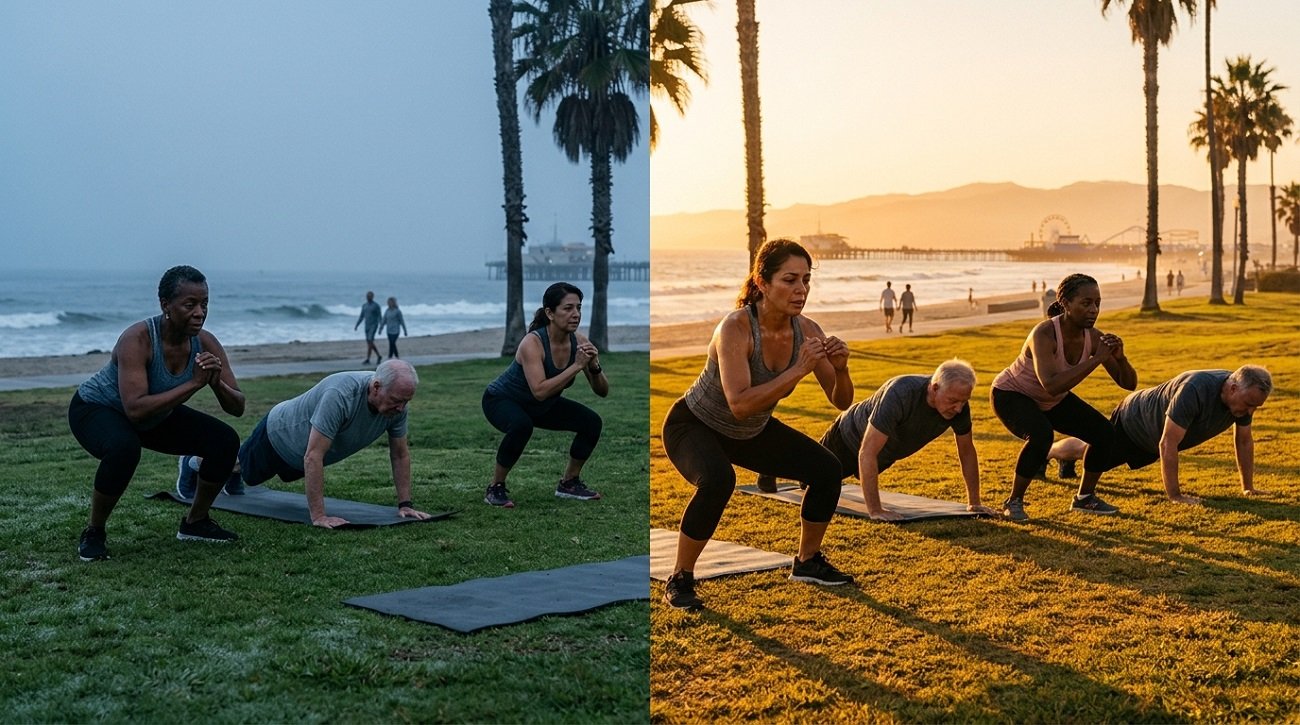
Relatable Scenario: You’re 55, living in Santa Monica, and you’ve noticed your strength isn’t what it used to be. Simple tasks like carrying groceries or playing with your grandkids feel harder. You know you should exercise, but the thought of joining a gym—dealing with crowds, intimidating equipment, and expensive memberships—makes you cringe. You’re not alone. Many adults face this exact dilemma. The good news? You don’t need a traditional gym to build muscle after 50. This guide will show you exactly how to build muscle without a gym, using Los Angeles’s greatest asset: the outdoors.
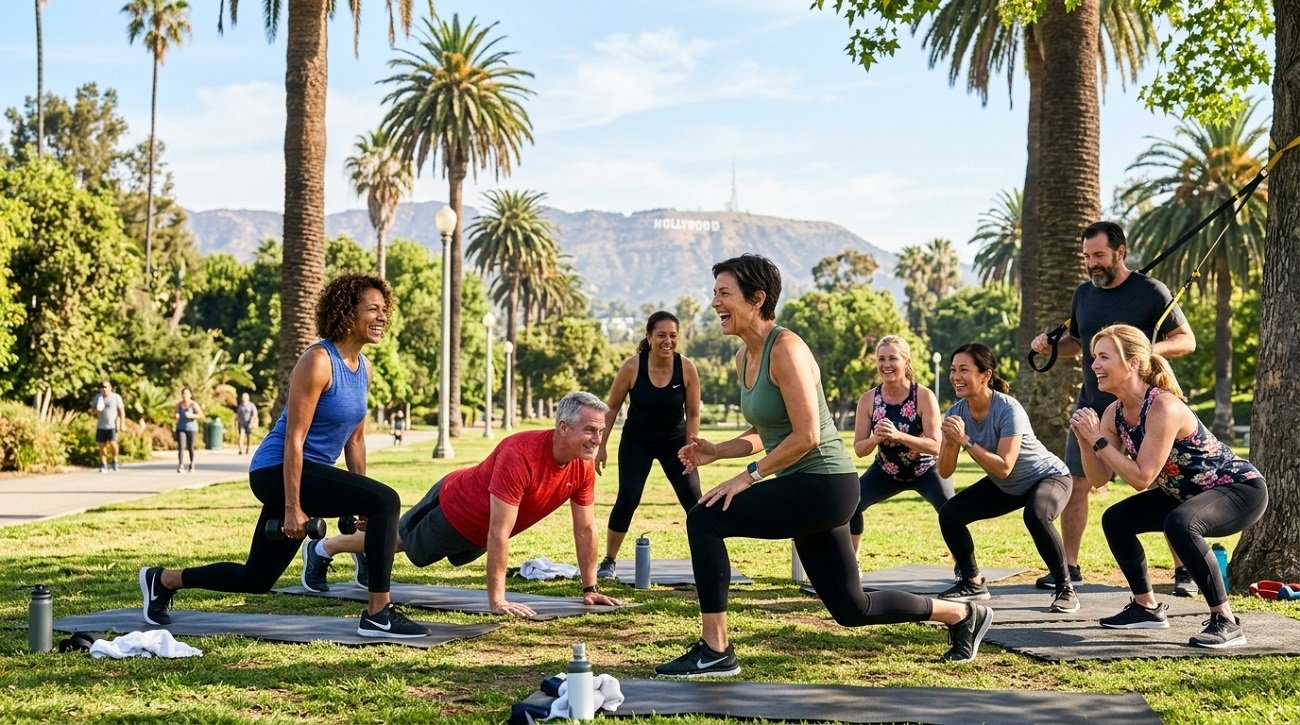
Table of Contents
1. Why You Must Build Muscle After 50
Let’s be clear: muscle isn’t just about looking good at the beach (though that’s a nice bonus). After 50, it’s your armor against aging. Sarcopenia—the age-related loss of muscle mass and strength—starts quietly in your 30s but accelerates after 50. Without intervention, you can lose 3-8% of your muscle mass per decade. This isn’t just about weakness; it’s about independence. The National Institute on Aging notes that weaker grip strength and slower walking speed are linked to higher risks of falls, mobility limitations, and even earlier mortality.
But here’s the empowering truth: you can fight back. Research shows that resistance training can effectively build muscle and strength in older adults, often to a similar degree as in younger populations. A systematic review and network meta-analysis of 151 randomized trials found that resistance training significantly improves physical function, lean body mass, and lower-body muscle hypertrophy and strength in older adults.
Another meta-analysis specifically focusing on lower extremity hypertrophy confirmed that resistance training promotes muscle growth in the legs of older adults.
At Focus Camp, we’ve seen this science play out in real life. Our members over 50 don’t just maintain their muscles after 50—they build them. They regain the ability to climb stairs without knee pain, lift their grandchildren with ease, and recover from illnesses faster. Muscle is your metabolic engine, your joint protector, and your confidence builder. And you don’t need a gym to get it.
What to do with this information: Stop viewing muscle building as a young person’s game or a gym-only endeavor. Commit to the idea that strength training is non-negotiable for healthy aging, and the rest of this guide will show you how to do it right, right here in LA.
2. The No-Gym Advantage: Why Los Angeles Is Your Ultimate Fitness Playground
Los Angeles is blessed with an embarrassment of outdoor riches. From the Santa Monica stairs to the Kenneth Hahn State Recreation Area, our city is a giant, free gym waiting to be used. Embracing fitness without a gym offers advantages that four walls and a mirror can’t match.
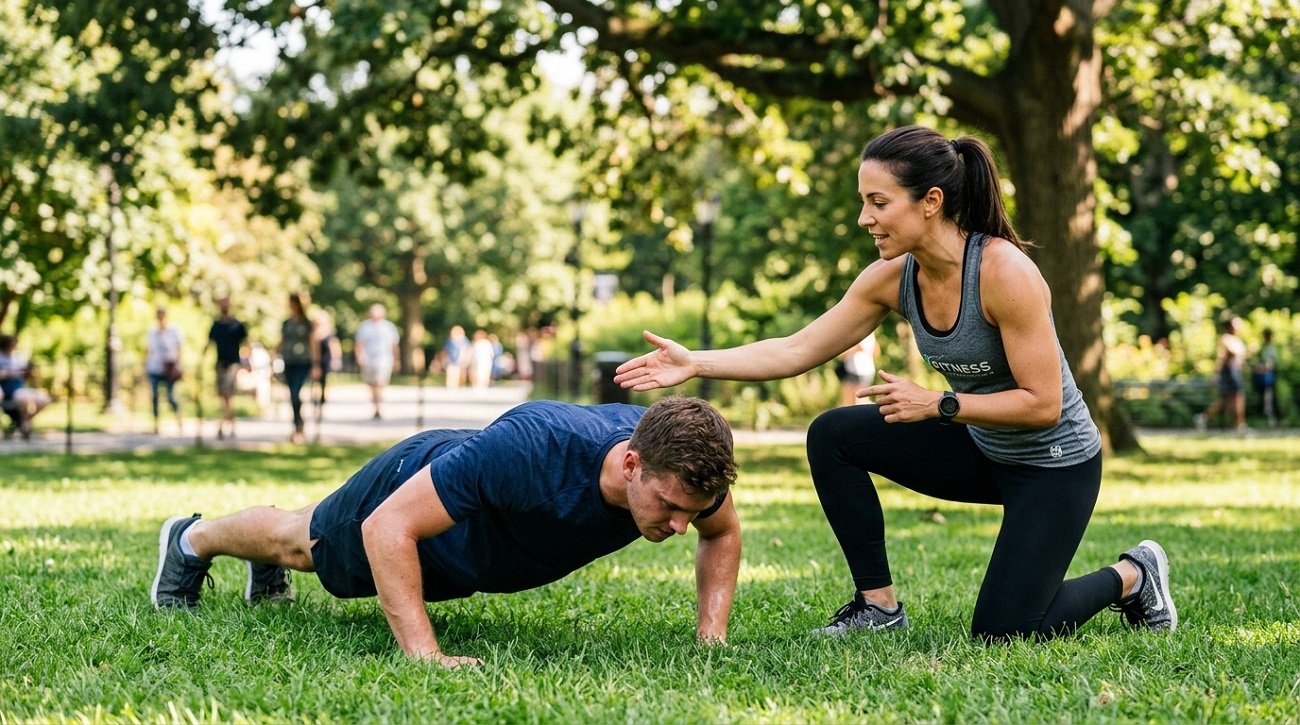
First, there’s the mental health boost. Being in nature reduces stress, anxiety, and depression. A study published in Brain, Behavior, and Immunity found that spending time outdoors lowers inflammation levels, a key driver of chronic disease. Sun exposure also helps your body synthesize vitamin D, crucial for bone health and immune function—something many older adults lack.
Then there’s the functional variety. A gym has you doing the same motions on the same machines. Outdoors, terrain varies. Sand challenges your stabilizers, hills build power, and uneven surfaces improve balance—a critical concern for over-50s. We incorporate this into every Focus Camp session. One day you’re doing strength training on the grass in Palisades Park, the next you’re navigating the soft sand at Venice Beach.
The novelty keeps your brain engaged and your muscles guessing. Our members consistently tell us the same thing: “I never get bored.” Jacob, 42, who lost 18 lbs and built significant strength with us, mentioned that the variety—from strength training to outdoor games—kept him consistent for the first time in his life.
What to do with this information: Reframe your mental image of a “workout.” It doesn’t require a treadmill or a weight rack. Your next session could be a brisk walk on the beach with bodyweight squats mixed in, or a yoga flow in the park. Start exploring LA’s neighborhoods not just as places to live, but as your training ground. Check out our guide to outdoor fitness spots in LA for specific ideas.
3. Focus Camp’s Approach: Real Experience Building Muscle Without Walls
This section shares our genuine experience and member observations from over 4-5 years of training adults over 45 outdoors in LA.
At Focus Camp, we’ve distilled muscle building for the over-50 crowd into a simple, effective philosophy: form first, consistency second, intensity third. Our trainers, Francois and Tina, have over a decade of combined experience working specifically with this demographic.
Francois’s mantra is “Focus on form first—results come naturally after consistency.” This isn’t just coach-speak; it’s backed by science. Poor movement patterns are a leading cause of injury in older adults, which can derail progress for months. We start every member with a movement assessment. If you can’t do a proper bodyweight squat, we won’t load you with weights. We’ll use a chair for support or have you practice the hinge pattern until it’s automatic.
Our approach is distinctly different from the typical gym experience. As one member noted, “I’ve never been a gym person. I don’t enjoy the ambiance and to use the machines always takes a lot of discipline. Having Francois as a trainer has really helped me to overcome my hesitancy… He is encouraging but also willing to give you the extra push you need to challenge yourself”.
We keep groups small—usually 4-8 people—so everyone gets attention. Tina’s specialty is creating a supportive environment where members grow at their own pace. “Stay consistent—even small progress every week adds up,” she tells clients. This approach works: our member retention rate is 70-80%, and 84% of members report noticeable improvements in strength, energy, and mood within the first month.
We also mix training styles constantly. A typical week might include two strength-focused sessions (using bodyweight, bands, or natural objects), one mobility/yoga session, and one outdoor activity like hiking or beach games. This variety prevents plateaus and addresses all aspects of fitness—strength, endurance, mobility, and balance.
What to do with this information: If you’ve been intimidated by gyms or group fitness classes, seek out a program that emphasizes personalized coaching and progressive skill-building. Don’t be afraid to ask trainers about their philosophy and experience with older adults. Your body deserves expert guidance, not guesswork.
4. Science-Backed Exercises to Build Muscle After 50
You don’t need iron to build muscle. Your own body weight, used correctly, provides ample resistance for hypertrophy, especially for beginners or those returning to exercise. The key to gain muscle safely is progressive overload—gradually increasing the challenge to your muscles.
Here are four foundational exercises, scaled for any level:
1. The Squat (Chair-Assisted to Pistol)
Squats build the quadriceps, glutes, and hamstrings—muscles critical for standing up from a chair, climbing stairs, and preventing falls.
- Beginner: Chair Squats. Sit down onto a chair, stand back up. Use your arms for assistance if needed.
- Intermediate: Bodyweight Squats. Lower until thighs are parallel to the ground.
- Advanced: Goblet Squats with a rock or water jug, or progress toward pistol squats.
2. The Push-Up (Wall to Floor)
Push-ups build the chest, shoulders, and triceps, improving pushing strength for daily activities.
- Beginner: Wall Push-Ups. Stand arm’s length from a wall, push away.
- Intermediate: Incline Push-Ups on a bench or sturdy table.
- Advanced: Standard Push-Ups on the floor, then progress to decline or plyometric push-ups.
3. The Inverted Row (Under a Table or Bars)
This exercise builds the back and biceps, countering the forward hunch many develop with age.
- Beginner: Australian Rows with feet on the ground, using a bar or sturdy table edge.
- Intermediate: Feet elevated on a bench.
- Advanced: Feet elevated with a weighted vest or slow tempo.
4. The Glute Bridge (Single-Leg Progression)
Strong glutes protect the lower back and power walking and climbing.
- Beginner: Double-Leg Glute Bridge on the floor.
- Intermediate: Single-Leg Glute Bridge.
- Advanced: Elevated Glute Bridge with shoulders on a bench, or weighted with a sandbag.
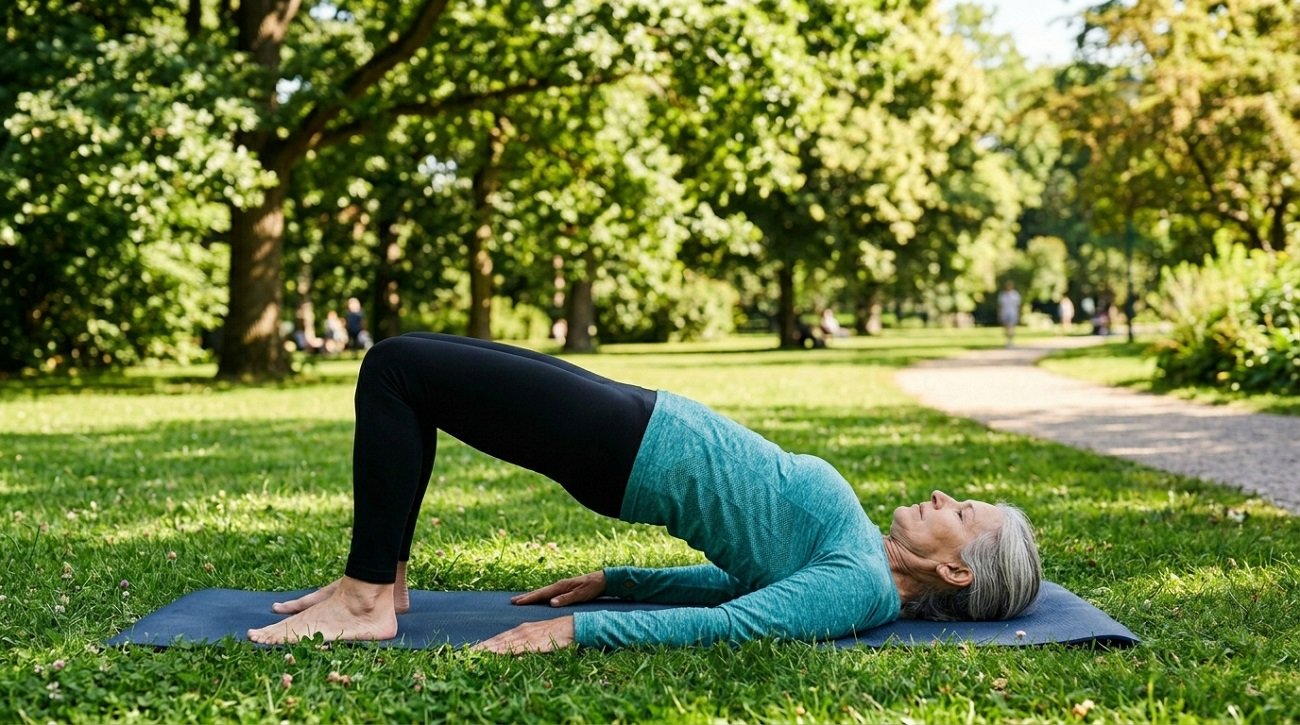
A study on physically frail older adults (average age 78.7) showed that a 12-week bodyweight squat program significantly increased knee extension torque and thigh muscle thickness. This proves that simple, bodyweight movements can drive meaningful muscle growth even in advanced age.
What to do with this information: Master these four movements. Start at a level where you can complete 10-15 reps with good form. Once that’s easy, progress to the next variation. This is the cornerstone of your no-gym muscle-building program.
5. Designing Your Weekly No-Gym Muscle-Building Routine
Consistency beats intensity. A realistic, sustainable weekly schedule is your roadmap to success. Based on our experience and exercise science, here’s a template that works for most adults over 50:
| Day | Focus | Example Activity | Location Idea |
|---|---|---|---|
| Monday | Strength | Bodyweight squats, push-ups, planks | Local park (e.g., Palisades Park) |
| Tuesday | Mobility/Recovery | Yoga or stretching | Beach (e.g., Venice Beach) |
| Wednesday | Strength | Inverted rows, glute bridges, lunges | Outdoor fitness court |
| Thursday | Active Recovery | Brisk walk or easy hike | Kenneth Hahn State Recreation Area |
| Friday | Full-Body Circuit | Combine strength + cardio (e.g., hill sprints) | Santa Monica stairs |
| Weekend | Fun Activity | Group sport (e.g., beach volleyball) | Beach or community park |
Key Principles:
- Frequency Over Duration: Two to three 30-45 minute strength sessions per week is sufficient. The CDC recommends at least 150 minutes of moderate-intensity aerobic activity weekly, which can be met through brisk walking.
- Progressive Overload: Each week, try to add a rep, an extra set, or a harder variation.
- Listen to Your Body: Muscle soreness is normal; sharp joint pain is not. We always tell clients, “Reduce the weight and get the movement right first.”
This sample schedule aligns with our philosophy of variety and balance. We mix strength, mobility, and outdoor activities so it never becomes repetitive. As member Jennifer, 38, found, combining strength training, outdoor workouts, and lifestyle coaching for 6 months helped her sleep through the night, increase energy, and build lasting habits.
What to do with this information: Don’t overthink it. Write this schedule on your calendar. Treat these appointments with yourself as non-negotiable. If you miss a day, don’t quit—just get back on track the next day. For more structured guidance, explore our Focus Camp program.
6. Nutrition for Muscle Growth: Eating to Build Strength Without a Gym
You can’t out-train a poor diet. To build muscle effectively, your body requires adequate protein, calories, and smart nutrient timing. The protein needs of older adults are actually higher than previously thought—around 1.0-1.2 grams per kilogram of body weight daily, compared to the 0.8 g/kg RDA for younger adults. For a 160-pound person, that’s roughly 73-87 grams of protein daily.
Protein: Quality and Distribution
Aim for 25-40 grams of high-quality protein per meal. This could be:
- Breakfast: Greek yogurt with berries and nuts, or 3 eggs with spinach.
- Lunch: Grilled chicken salad with quinoa, or lentil soup with a side of hummus.
- Dinner: Baked salmon with sweet potato and broccoli, or tofu stir-fry with edamame.
Don’t forget plant-based proteins. Research shows that wheat protein can effectively stimulate muscle protein synthesis in older men.
Hydration and Timing
Dehydration impairs performance and recovery. Aim for 8-10 glasses of water daily, more if you’re training in LA’s heat. Consume a protein-rich snack or meal within 60-90 minutes post-workout to maximize muscle repair.
The LA Advantage
Our city offers year-round access to fresh, local produce. Visit farmers’ markets in Santa Monica or Hollywood for affordable, nutrient-dense foods. Focus on whole foods: lean proteins, colorful vegetables, healthy fats (avocado, olive oil), and complex carbs.
What to do with this information: Calculate your daily protein goal (weight in kg × 1.2). Track your intake for a few days using an app like MyFitnessPal to see where you stand. Plan your meals around protein sources. For personalized guidance, consider our healthy nutrition & diet planning service.
7. Recovery and Injury Prevention: The Over-50 Essential
Recovery isn’t passive; it’s where your muscles actually rebuild and grow stronger. Skip it, and you’ll plateau or get injured. For adults over 50, smart recovery is non-negotiable.
Sleep: The Ultimate Anabolic State
During deep sleep, your body releases growth hormone, essential for muscle repair. Aim for 7-9 hours per night. Create a cool, dark sleeping environment. Avoid screens 60 minutes before bed. As member Jennifer found, improving her sleep was a game-changer for her energy and consistency.
Active Recovery
On non-strength days, do something. A brisk walk, easy swim, or gentle yoga flow promotes blood flow, delivering nutrients to muscles and clearing waste products. LA’s beaches and parks are perfect for this.
Mobility and Self-Myofascial Release
Tight muscles lead to poor form and injury. Spend 10-15 minutes daily on mobility work. Use a foam roller or lacrosse ball to work on tight spots. Focus on hips, shoulders, and ankles—the areas that stiffen with age.
Injury Prevention Strategies
- Warm-Up Properly: 5-10 minutes of light cardio followed by dynamic stretches (leg swings, arm circles).
- Start Slow: If you’re new to exercise or returning after a break, begin with 1-2 sessions per week and gradually increase.
- Listen to Pain: We repeat: sharp pain is a stop signal. Muscle fatigue is okay; joint pain is not. We always tell clients, “Don’t rush, finish every rep properly.”
- Cross-Train: Don’t do the same activity every day. Mix up your movements to avoid overuse injuries.
What to do with this information: Treat sleep and mobility with the same importance as your workouts. Schedule recovery time into your calendar. For specific techniques, read our guide on 5 recovery techniques every fitness enthusiast should know.
8. Tracking Progress: How to Measure Muscle Gain Without a Scale
The scale lies. Muscle is denser than fat, so you might look leaner and stronger without the scale moving much. Here are better ways to track progress:
Performance Metrics
- Rep Maxes: Can you do 5 more push-ups than last month? Hold a plank 30 seconds longer?
- Time: Has your 1-mile walk time decreased?
- Endurance: Can you play with your grandkids longer without tiring?
Functional Goals
- Can you carry all your groceries in one trip?
- Can you stand up from a chair without using your arms?
- Can you climb a flight of stairs without getting winded?
Visual and Fit Tracking
- Photos: Take progress photos monthly in the same lighting.
- Clothing Fit: Are your clothes fitting better? Notice how jeans feel around the thighs and waist.
- Tape Measure: Measure your waist, hips, and thighs monthly.
Mental and Energy Metrics
- Energy Levels: Rate your daily energy from 1-10. It should increase over time.
- Confidence: Do you feel more confident in your body’s abilities?
- Mood: Are you less stressed or anxious?
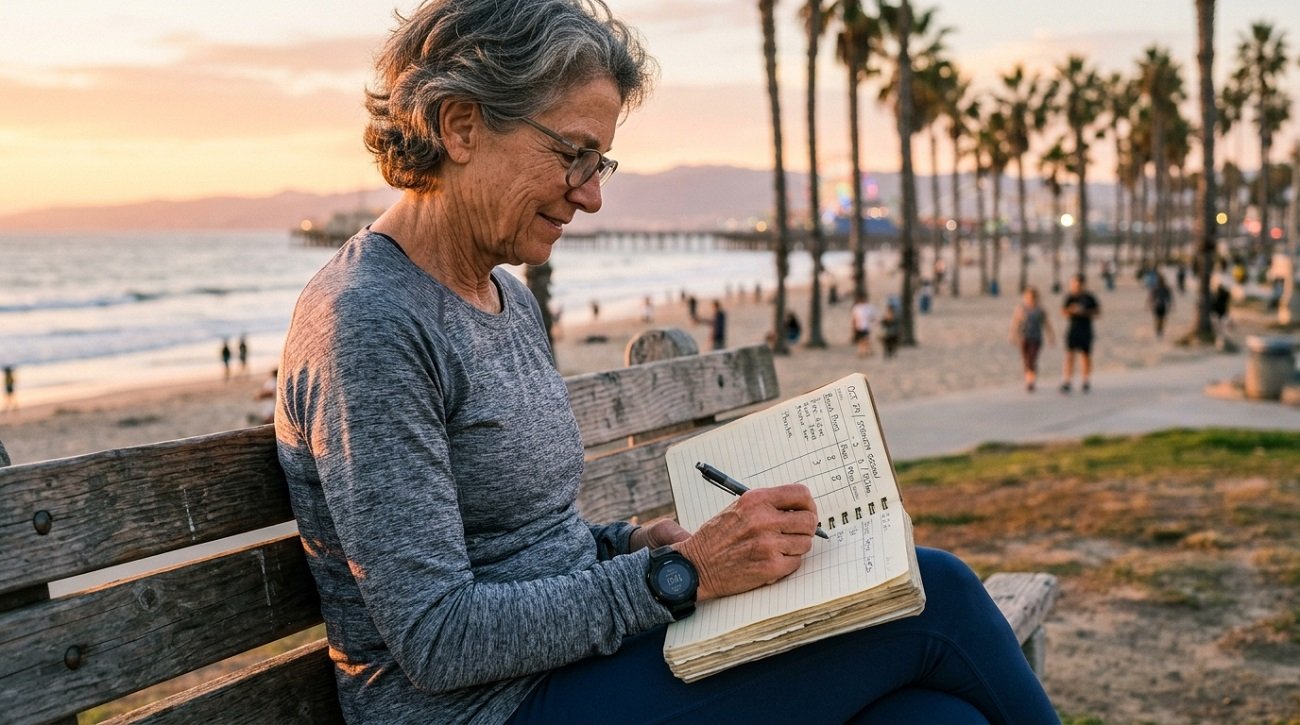
Member Liam, 47, didn’t just lose weight—he improved his balance and leg strength, allowing him to enjoy regular walks again without discomfort. These non-scale victories are the real markers of success.
What to do with this information: Choose 3-5 metrics to track monthly. Focus on trends, not daily fluctuations. Celebrate non-scale victories just as much as—if not more than—weight loss.
9. Overcoming Common Obstacles: Real Solutions for LA Adults
We’ve heard every excuse (and valid concern) in the book. Here are solutions to the most common barriers:
“I Don’t Have Time”
Solution: Break it up. Three 10-minute sessions are as effective as one 30-minute session. Do squats during TV commercials. Take a 10-minute walk after lunch. Every bit counts.
“I’m Too Out of Shape to Start”
Solution: Start where you are. Chair-based exercises are a perfect entry point. Our chair training program for 45+ is designed specifically for this. As member Jacob said, “I’ve been inactive and sloth like… but the classes led by Tina have been great and I’m learning how to perform”.
“I’m Afraid of Injury”
Solution: This is exactly why we emphasize form and coaching. Start with bodyweight only. Use stable surfaces for support. Our trainers are certified in First Aid & CPR and specialize in injury prevention. We modify every exercise to your ability.
“I Hate Gyms”
Solution: Then don’t go to one! LA is your gym. We train outdoors in beautiful locations. No mirrors, no judgment, no machines to figure out. Just fresh air and community.
“I Don’t Know What to Do”
Solution: That’s what we’re here for. Every Focus Camp session is guided from start to finish. You’re not guessing or doing random exercises. You’re being coached in real time—how to move properly, how to progress. Check out our beginners guide to Focus Camp to see exactly what to expect.
“I’ve Tried Before and Failed”
Solution: You didn’t fail; your approach did. The difference with Focus Camp is the accountability and community. As one member shared, “I was struggling with consistency for years, but Focus Camp completely changed that for me. The environment keeps you motivated, and you actually look forward to showing up”.
What to do with this information: Identify your specific obstacle. Find a solution that addresses it. Don’t go it alone. Community and coaching are the difference between trying and succeeding.
10. Frequently Asked Questions (FAQ)
Q: Can you build muscle after 50?
A: Absolutely. Bodyweight exercises, when done progressively, provide ample resistance for muscle growth. Research shows that resistance training, whether with weights or bodyweight, effectively builds muscle in older adults. The key is progressive overload—making the exercise harder over time.
Q: How often should a 50-year-old work out to build muscle?
A: For muscle building, 2-3 strength sessions per week is ideal. This allows for adequate recovery. Add 2-3 days of moderate aerobic activity, like brisk walking, for overall health. The CDC recommends at least 150 minutes of moderate-intensity aerobic activity weekly.
Q: Is outdoor training safe for older adults with joint issues?
A: It can be, with proper modifications. We always start with a movement assessment. For joint issues, we emphasize low-impact activities like swimming, cycling, and controlled bodyweight movements. We avoid high-impact activities until you’re ready. Our trainers are experts in injury prevention.
Q: How long does it take to build muscle at 50?
A: Most people feel stronger and more energetic within 2-4 weeks. Visible muscle changes typically take 8-12 weeks of consistent training. Remember, muscle gain is slower than weight loss, but it’s more permanent and transformative. Member Jacob lost 18 lbs and gained significant strength in 3 months.
Q: What if I’ve never exercised before—where do I start?
A: Start small and simple. Begin with 10-minute walks and basic chair-based exercises. Focus on form, not intensity. Our complete beginners guide is a great resource. Consider booking a private session with us to learn the fundamentals safely.
Q: Can I combine walking with strength training for better results?
A: Yes! This is an excellent approach. Walking improves cardiovascular health and aids recovery. Strength training builds muscle and boosts metabolism. Together, they create a powerful synergy for overall fitness and fat loss. Try walking on your non-strength days or as a warm-up.
11. Your Next Step: Start Building Muscle Today with Focus Camp
You’ve made it this far. You understand the science, the exercises, the plan, and the obstacles. The only thing left is to start. And we’re here to make that easy.
Ready to Build Muscle, Gain Strength, and Join a Community?
Our Offer to You:
- Free Trial Session: Experience a Focus Camp session firsthand. Meet our trainers, try a workout, and see our community in action.
- No Pressure: We’ll never pressure you to sign up. We just want you to feel the difference.
- Any Location: With over 29 training locations across LA—from Santa Monica to Pasadena—we’re sure to have a spot convenient for you.
How to Get Started:
Visit our online booking page to schedule your free session, or reach out to us directly to ask questions and book. Wear comfortable clothes and bring water. We’ll provide the rest.
As Francois says, “Best to you my friend. All is well. Sun shine your way.” Your strongest years are ahead. You don’t need a gym. You need the right guidance, the outdoors, and a community that supports you. That’s Focus Camp. Join us.
Final Note: Always consult with your healthcare provider before starting any new exercise program, especially if you have pre-existing health conditions.
External Resources
- National Institute on Aging – Slowing Sarcopenia [VERIFY: claim about NIA Sarcopenia article]
- CDC – Physical Activity Benefits for Adults 65 or Older [CDC’s standard physical activity guidelines site.]
- Effects of Resistance Training Volume on Physical Function, Lean Body Mass and Lower-Body Muscle Hypertrophy and Strength in Older Adults – A systematic review and network meta-analysis [VERIFY: claim about specific PubMed meta-analysis]