
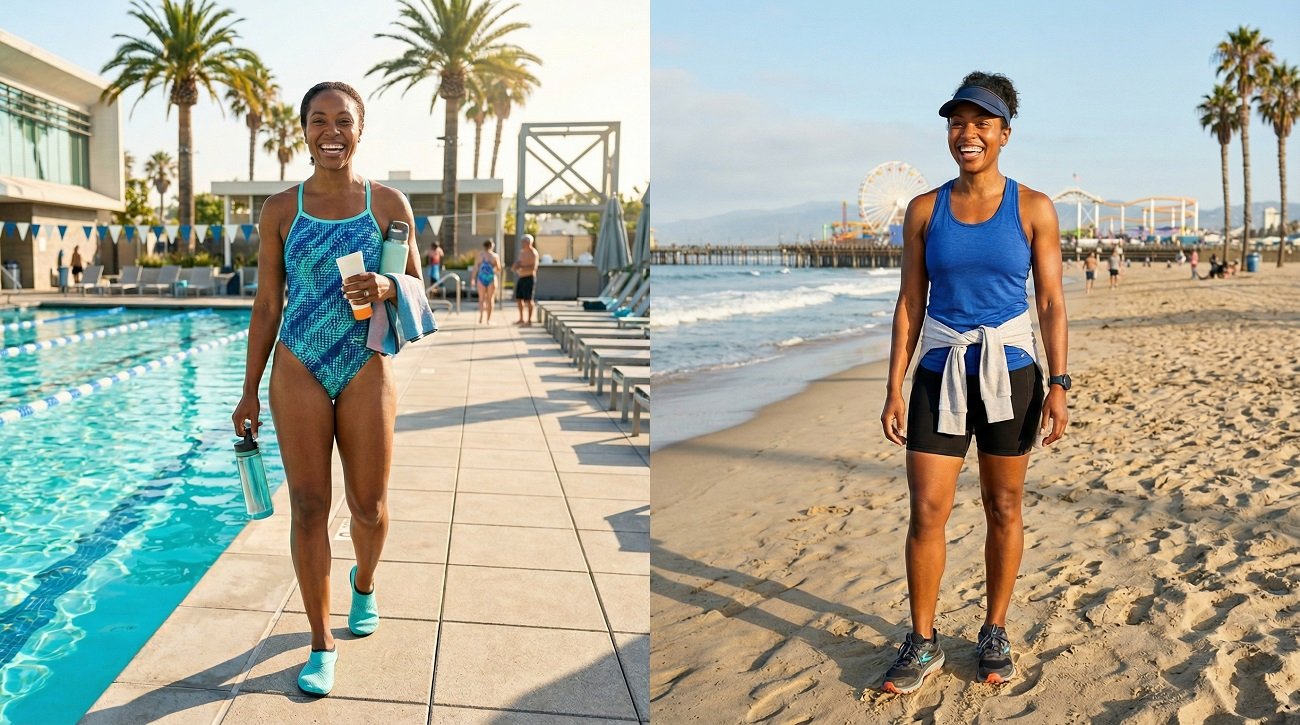
Last March, a woman named Carla sat down on the bench outside our training area on Albany Street. She’d driven in from Culver City — took her 35 minutes in traffic, which is actually not bad for a Wednesday morning. She was 49, worked in healthcare administration, and she looked the kind of tired that doesn’t come from one bad night of sleep.
She told me: “I wake up stiff. My hands ache. My knees hurt going down stairs. I’ve gained twelve pounds that won’t come off. My doctor says my blood work is normal. But I don’t feel normal. I feel like my body is fighting something.”
I asked her one question.
“Has anyone ever checked your CRP? Your high-sensitivity CRP?”
She looked at me like I was speaking another language. “What’s that?”
That conversation? I’ve had it maybe 200 times since Tina and I started Focus Camp. And it’s not because doctors are dropping the ball — it’s because the kind of low-grade, smoldering inflammation Carla was dealing with doesn’t show up on standard blood panels. It doesn’t put you in the hospital. It just makes you feel… off. Day after day. Month after month. Until you start believing that “off” is just what getting older feels like.
It isn’t.
And the right kind of outdoor exercise — the kind we do every single day here in Los Angeles — is one of the most powerful tools available to turn it around. Not just any exercise, though. The wrong kind makes chronic inflammation worse. I’ll show you exactly which kind helps, which kind hurts, and I’ll give you five specific workouts you can do this week at LA beaches and parks to start making a real dent in your inflammation.
This is going to be long. I’m not going to shortcut it because inflammation is too important — and too misunderstood — to gloss over with bullet points and generic advice. If you’re dealing with the stiffness, the fatigue, the brain fog, the stubborn weight that won’t budge… what follows could genuinely change how you think about your body.
In This Article
- What Chronic Inflammation Actually Is — And Why Your Doctor Probably Isn’t Catching It
- Los Angeles: The Best And Worst City For Chronic Inflammation
- How Outdoor Exercise Actually Reduces Chronic Inflammation: The Science That Matters
- 5 Anti-Inflammatory Outdoor Workouts You Can Do In LA This Week
- The Anti-Inflammatory Weekly Schedule For Busy Angelenos
- Foods That Fight Inflammation: The Complete LA Nutrition Guide
- Supplements That Actually Have Evidence Behind Them
- Exercises That Make Inflammation Worse
- Sleep, Stress, And Environment: The Other Half Of The Equation
- How Focus Camp’s Programs Address Chronic Inflammation
- How To Track Your Progress
- What To Do Right Now
- Frequently Asked Questions
What Chronic Inflammation Actually Is — And Why Your Doctor Probably Isn’t Catching It
Let me clear something up right away, because there’s a lot of bad information floating around about inflammation.
Inflammation itself isn’t the enemy. Your body needs inflammation to survive. When you twist your ankle and it swells up, turns red, gets warm — that’s your immune system rushing blood and white blood cells to the area to repair the damage. When you catch a cold and your glands swell and you run a fever — that’s your immune system fighting off the infection. This is called acute inflammation. It shows up fast, it targets a specific problem, and it goes away when the problem is solved. Usually within hours or days.
You want this. You need this. Without it, a paper cut could kill you.
Chronic inflammation is a completely different thing.
Chronic inflammation is what happens when your immune system gets stuck in the “on” position and can’t find the off switch. There’s no specific injury to fix. No infection to fight off. But your body keeps pumping out inflammatory chemicals — things like IL-6, TNF-α, IL-1β — at low levels, all the time, throughout your entire system. It’s like a fire alarm that keeps screaming even though there’s no fire. Eventually the firefighters start damaging the building because they’re constantly in emergency mode, spraying water and breaking down doors when there’s nothing to put out.
You don’t feel “sick” with chronic inflammation the way you feel sick with the flu. You feel worn down. And it creeps up so slowly that you chalk it up to getting older, or being stressed, or just… life.
Here’s what chronic inflammation actually does to your body over time. Every single item on this list is backed by published, peer-reviewed research — I’m not being dramatic:
| What Chronic Inflammation Does | The Mechanism Behind It | What You Actually Feel Day To Day |
|---|---|---|
| Damages artery walls | Inflammatory cytokines cause plaque to build up in artery walls — that’s atherosclerosis | Blood pressure creeping up, occasional chest tightness, cold hands and feet |
| Makes cells resistant to insulin | TNF-α and IL-6 literally block insulin receptors, so glucose can’t get in | Sugar cravings, energy crashes 1-2 hours after eating, growing belly fat |
| Erodes joint cartilage | Chronic inflammatory markers switch on enzymes called MMPs that chew through cartilage | Morning stiffness taking 30+ minutes to loosen, aching knees, cracking joints |
| Messes with brain chemistry | Inflammatory cytokines cross the blood-brain barrier, interfering with serotonin and dopamine | Brain fog. Difficulty focusing. Low motivation. Mood swings. |
| Promotes belly fat storage | Cortisol signals the body to store fat around organs as a protective buffer | Expanding waistline, pants fitting tighter, stubborn belly that won’t firm up |
| Breaks down muscle tissue | Shifts protein metabolism toward breakdown instead of building | Feeling weaker despite exercising, losing muscle tone, slower recovery |
| Wrecks your sleep | IL-6 and TNF-α alter melatonin and growth hormone regulation | Can’t fall asleep, wake up between 2-4 AM, waking exhausted after 7+ hours |
| Ages skin faster | Inflammation increases MMPs that break down collagen and elastin | Dull, tired skin. Adult acne. Fine lines appearing faster than they should. |
| Weakens bones | Stimulates osteoclasts (bone-breaking cells) while suppressing osteoblasts (bone-builders) | More fractures, worsening posture, unexplained dental issues |
| Suppresses immune system | Paradoxically exhausts the immune system while it’s overactive | Catching every cold, slow recovery from minor illnesses, slow wound healing |
Read through that third column again. How many of those sound like your daily reality?
If you’re ticking off three or more, chronic inflammation is almost certainly a major factor in how you feel every day. And you are far from alone. A 2024 analysis published in Frontiers in Immunology estimated that roughly 35 to 40 percent of American adults over 40 have elevated markers of chronic low-grade inflammation — even when their standard blood work comes back “normal.”
Why Standard Blood Work Misses Chronic Inflammation
This is the part that drives me crazy.
You go to the doctor for your annual checkup. They run a basic metabolic panel, a lipid panel, maybe a CBC. These tests don’t measure inflammation. Not directly. The specific markers that reveal chronic inflammation — hs-CRP, ESR, IL-6, TNF-α, and fibrinogen — are not included in most routine blood panels. You have to specifically ask for them.
| Your hs-CRP Level | What It Actually Means | What You Should Do |
|---|---|---|
| Below 0.5 mg/L | Your inflammatory burden is very low. This is optimal. | Keep doing whatever you’re doing. |
| 0.5 – 1.0 mg/L | Low risk. Inflammation is well-controlled. | You’re in a good range. Maintain your healthy habits. |
| 1.0 – 3.0 mg/L | Moderate risk. Low-grade chronic inflammation is likely present. | Lifestyle changes become important — exercise, diet, sleep, stress management. |
| Above 3.0 mg/L | High risk. Significant chronic inflammation that’s actively damaging your health. | Take action now. Lifestyle changes plus a medical evaluation. |
| Above 10.0 mg/L | May indicate an acute infection or more serious condition. | Retest in 2-3 weeks. If still elevated, pursue a thorough medical workup. |
What’s Driving Chronic Inflammation In The First Place?
Chronic inflammation builds up from a stack of factors that pile on top of each other over years. Think of it like a cup under a dripping faucet. Here are the main drips filling your cup:
- Chronic psychological stress. Your body can’t tell the difference between a physical threat and a psychological threat. In all cases, it pumps out cortisol and adrenaline. When cortisol stays elevated day after day, your cells become resistant to it — similar to insulin resistance. And since one of cortisol’s main jobs is to suppress inflammation, losing that brake pedal means inflammation runs wild.
- Too much sitting. When you sit for extended periods, your muscles aren’t releasing anti-inflammatory proteins called myokines. Research in Medicine & Science in Sports & Exercise found that each additional hour of sitting beyond 8 hours per day was associated with a 15% increase in CRP levels.
- What you’re eating. Processed foods, refined sugars, industrial seed oils loaded with omega-6, and excess alcohol all directly activate inflammatory pathways.
- Poor sleep. Even one night of insufficient sleep increases inflammatory markers. If you’re over 50 and inflammation is messing with your sleep, check our guide on best exercises to sleep better after 50 in Los Angeles.
- Excess visceral fat. Deep belly fat functions like an inflammation factory, pumping out TNF-α, IL-6, and resistin around the clock.
- Air pollution. PM2.5 particles and ozone trigger lung inflammation that spreads systemically.
- Overtraining. Too much intense exercise without recovery keeps acute inflammation from resolving.
- Gut problems. “Leaky gut” allows bacterial endotoxins (LPS) into the bloodstream, triggering systemic inflammation.
- Hormonal shifts. For women, the decline in estrogen during perimenopause removes a natural anti-inflammatory protection. Our hormone-balancing outdoor fitness program was built specifically for this.
Los Angeles: The Best And Worst City For Chronic Inflammation
The Ugly Truth About Inflammation In LA
Air quality is a real problem. The American Lung Association’s 2025 report gave Los Angeles County an F for ozone and short-term particle pollution. But you can work around it if you’re strategic:
| Strategy | Why It Actually Helps | How To Do It In Real Life |
|---|---|---|
| Exercise early — before 8 AM | Ozone levels peak in the afternoon. Mornings have the lowest pollution. | Set your alarm 45 minutes earlier. Get it done before the smog builds up. |
| Choose coastal locations | Ocean breeze disperses pollutants. Coastal PM2.5 is 30-50% lower than inland. | Santa Monica Beach, Venice Beach, Palisades Park are your friends. |
| Check AQI before heading out | AQI above 100 is unhealthy for anyone exercising (because you’re breathing harder). | Download the EPA AirNow app. Takes 10 seconds to check. |
| Stay away from freeways | Vehicle emissions create a high-pollution zone 300-500 meters from major freeways. | Don’t run along the 10, 405, or 110. Choose parks a few blocks away. |
The Flip Side: Why LA Is Also An Anti-Inflammatory Gold Mine
- 365-day outdoor access. No off-season. This gives you an enormous advantage in managing chronic inflammation.
- World-class outdoor spaces within 30 minutes. Santa Monica Beach, Runyon Canyon, Griffith Park — every single one provides cortisol-lowering, inflammation-reducing benefits.
- The ocean changes everything. Negative ion concentration near breaking waves runs 2,000-4,000 per cubic centimeter. A typical office building? About 100.
- Year-round farmers markets. Direct access to anti-inflammatory foods every day of the week.
- Sunlight and vitamin D. 15-20 minutes of midday sun produces roughly 10,000-25,000 IU of vitamin D. A 2025 meta-analysis found raising vitamin D from deficient to sufficient reduced CRP by 22%.
How Outdoor Exercise Actually Reduces Chronic Inflammation: The Science That Matters
Your Muscles Are An Anti-Inflammatory Organ (Yes, Really)
When you exercise, your contracting muscles release proteins called myokines into your bloodstream. The myokine most relevant to inflammation is IL-6 — interleukin-6. Here’s the critical distinction:
- When IL-6 is released by immune cells, it acts as a pro-inflammatory signal.
- When IL-6 is released by contracting muscle, it acts as an anti-inflammatory signal that tells your body to stop producing TNF-α and IL-1β.
Same molecule. Completely opposite effect depending on where it comes from. This was discovered by Dr. Bente Pedersen at the University of Copenhagen. Her work demonstrated that muscle-derived IL-6 concentrations can increase 100-fold during moderate exercise, directly suppressing TNF-α production.
But — and this is the critical point — this only works when your muscles are actually contracting. Sitting at a desk for 10 hours? Zero myokines.
Regular Exercise Lowers CRP — The Evidence Is Overwhelming
| Type of Exercise | CRP Reduction | Time To Results | How To Use It |
|---|---|---|---|
| Moderate aerobic (walking, hiking) | 20-30% | 4-8 weeks | Foundation. Do 2-3 times per week. |
| Resistance training | 15-25% | 8-12 weeks | Build muscle for ongoing myokine production. 2 times per week. |
| HIIT | 20-35% (if not overdoing it) | 4-6 weeks | Use sparingly. Once, maybe twice per week max. |
| Yoga and mind-body | 15-25% | 6-10 weeks | Best for cortisol-driven inflammation. |
| Combined cardio + resistance + yoga | 30-45% | 8-12 weeks | Maximum anti-inflammatory effect. The Focus Camp approach. |
Nature Exposure Amplifies Everything
A 2023 meta-analysis in Environmental Research analyzed 36 studies comparing outdoor vs. indoor exercise. The results were striking:
- Cortisol reduction: 31% greater outdoors
- CRP reduction: 18-22% greater outdoors
- Mood improvement: 40% greater outdoors
This is driven by phytoncides from trees, negative ions from ocean waves, visual/auditory nature cues, and vitamin D synthesis. We explore these mechanisms in our article on outdoor fitness programs in Los Angeles for mental health.
Exercise Reduces Visceral Fat — The Inflammation Factory
A study in Diabetes Care showed that moderate-intensity exercise reduced visceral fat by 10-15% over 12 weeks — even without significant weight loss on the scale. If your waist measurement is going down, your inflammatory burden is going down. For adults over 50 struggling with belly fat, our walking workouts for weight loss after 50 lays out a complete protocol.
5 Anti-Inflammatory Outdoor Workouts You Can Do In LA This Week
Workout 1: The Beach Inflammation-Reduction Walk
Where: Santa Monica Beach — park at the Annenberg Community Beach House lot. Walk south toward Venice on the hard sand near the waterline.
How long: 40 to 50 minutes
How hard: Low to moderate. You should be breathing noticeably but still able to carry on a full conversation.
The Complete Routine:
- Minutes 0-5: Warm-up on the Strand (paved path). Easy pace. Breathe through your nose. Unclench your jaw.
- Minutes 5-10: Move to the hard sand near the waterline. Adjust to a brisk walk.
- Minutes 10-30: Main walking block. Sustained, moderate effort. Every 5 minutes, take 3 deliberately slow breaths (inhale 4 counts, exhale 6 counts).
- Minutes 30-35: Movement break. 10 neck rolls, 10 shoulder rolls, 10 torso twists, 5 slow squats, 10 ankle circles.
- Minutes 35-45: Return walk at a comfortable pace. Don’t check your phone.
- Minutes 45-50: Final cool-down and stretch. Calf, hamstring, and quad stretches (30 seconds each).
Workout 2: The Park Strength Circuit
Where: Palisades Park in Pacific Palisades or Griffith Park near the Merry-Go-Round lawn.
How long: 35 to 45 minutes
Equipment: A resistance band (light to medium) and a water bottle.
Circuit — 3 Full Rounds (30-45 sec rest between exercises, 90 sec between rounds):
| Exercise | Reps | Why It Fights Inflammation |
|---|---|---|
| Goblet squats | 12-15 | Big lower-body engagement = big myokine release. Improves hip mobility from sitting. |
| Incline push-ups (on bench) | 10-15 | Upper body pushing. Gentler on shoulders than floor push-ups. |
| Walking lunges (on grass) | 10 per leg | Hits glutes, quads, hamstrings. Grass adds slight instability for stabilizers. |
| Resistance band rows | 12-15 | Counteracts rounded-shoulder posture from desk work that causes neck/back inflammation. |
| Standing overhead press | 10-12 | Shoulder stability and core engagement. |
| Glute bridges | 15 | Fixes glute weakness from sitting that causes compensatory lower back inflammation. |
For a deeper dive into why these movement patterns matter, our guide on functional fitness training for everyday life breaks it down.
Workout 3: The Trail Inflammation-Clearing Hike
Where: Griffith Park — Fern Canyon trail, or Runyon Canyon (eastern entrance).
How long: 55 to 75 minutes
How hard: Low to moderate. Never gasping. If you are, slow down.
- Minutes 0-10: Easy uphill approach. Nasal breathing if possible.
- Minutes 10-15: Movement break. Deep breaths, torso twists, slow squats, ankle circles.
- Minutes 15-40: Sustained conversational pace. This is the core anti-inflammatory block. Pay attention to surroundings.
- Minutes 40-45: Viewpoint pause. 10 slow breaths (inhale 4, hold 2, exhale 6). Notice how your body feels.
- Minutes 45-65: Return hike. Shorter steps on downhill to protect knees.
- Minutes 65-75: Cool-down stretches at trailhead.
Workout 4: The Beach Yoga & Breathwork Flow
Where: Any quiet stretch of sand before 7:30 AM.
How long: 30 to 40 minutes
Who it’s for: High cortisol, overtraining recovery, autoimmune conditions, active recovery days.
The Routine:
- Centering (5 min): Box breathing (inhale 4, hold 4, exhale 4, hold 4) for 10 rounds.
- Yoga Flow (15-20 min): Cat-Cow, Child’s Pose, Downward Dog, Low Lunge, Warrior I & II, Triangle, Seated Forward Fold, Supine Twist, Bridge. Hold each 5-8 breaths.
- Breathwork (5 min): 4-7-8 breathing (inhale 4, hold 7, exhale 8) for 8-10 rounds.
- Savasana (5-10 min): Lie on the sand. Don’t try to relax. Just let your body settle.
This is the same approach Tina uses in our Yoga & Mindfulness Sessions at Focus Camp.
Workout 5: The Sand Metabolic Circuit (Anti-Inflammatory Version)
Where: Venice Beach soft sand area.
How long: 30 to 35 minutes
How hard: Moderate to moderately-high. If you feel like you might throw up, you went too hard.
Circuit — 4 Rounds (40 sec work, 30 sec rest, 2 min between rounds):
- Sand squats
- Push-ups (sand is forgiving on wrists)
- Alternating reverse lunges
- Plank shoulder taps
- Glute bridges
After each round: Walk to the waterline. Stand in ankle-deep surf for 30-60 seconds. Cold water triggers peripheral vasoconstriction, clearing metabolic waste and providing a mini cold exposure stimulus.
The Anti-Inflammatory Weekly Schedule For Busy Angelenos
| Day | What To Do | How Long | Main Mechanism |
|---|---|---|---|
| Monday | Beach Inflammation-Reduction Walk | 45 min | Myokine release + cortisol reduction + negative ions + vitamin D |
| Tuesday | Park Strength Circuit | 40 min | Muscle building + insulin sensitivity + bone density |
| Wednesday | Active recovery or full rest | 20-30 min | Nervous system recovery. Cortisol reset. |
| Thursday | Trail Inflammation-Clearing Hike | 60 min | Sustained myokine release + phytoncide exposure |
| Friday | Beach Yoga & Breathwork Flow | 35 min | Vagal tone + parasympathetic activation |
| Saturday | Sand Metabolic Circuit | 35 min | Combined strength + cardio + cold water recovery |
| Sunday | Full rest | 0 min | Complete recovery. Inflammation resolution. |
After every session, use the recovery techniques in our guide on recovery techniques every active person in Los Angeles needs.
Foods That Fight Inflammation: The Complete LA Nutrition Guide
What To Eat Regularly
| Food | Anti-Inflammatory Compounds | How Much Makes A Difference | Best LA Sources |
|---|---|---|---|
| Wild-caught salmon | Omega-3 (EPA/DHA) reduce IL-6, TNF-α, CRP | 2-3 servings/week (6-8 oz) | Santa Monica Seafood, Grand Central Market |
| Extra virgin olive oil | Oleocanthal (works like ibuprofen). Polyphenols reduce NF-κB. | 2-4 tbsp daily | California Olive Ranch, farmers markets |
| Turmeric + black pepper | Curcumin suppresses NF-κB. Piperine boosts absorption 2,000%. | 1/2-1 tsp daily + pepper | Any grocery store. Fresh root: 99 Ranch Market |
| Dark leafy greens | Carotenoids, magnesium, folate, vitamin K | 2-3 cups daily | Santa Monica Farmers Market, Trader Joe’s |
| Berries | Anthocyanins, vitamin C | 1 cup daily | Farmers markets, Whole Foods |
| Ginger | Gingerols inhibit COX-2 (same target as ibuprofen) | 1-2g fresh daily | Any grocery store, H Mart |
| Broccoli & cruciferous | Sulforaphane switches off inflammatory genes | 3-5 servings/week | Farmers markets, grocery stores |
| Avocado | Oleic acid, glutathione, magnesium | 1/2-1 daily | Everywhere in LA |
What To Stop Eating
| Food Category | The Inflammatory Mechanism | What To Have Instead |
|---|---|---|
| Refined sugar & HFCS | Triggers NF-κB, raises CRP, promotes insulin resistance | Fresh fruit, dark chocolate (70%+) |
| Refined carbohydrates | Spike blood sugar/insulin, low fiber feeds gut dysbiosis | Whole grains, sweet potatoes, oatmeal |
| Processed meats | AGEs bind to RAGE receptors, triggering NF-κB | Fresh poultry, fish, plant-based proteins |
| Industrial seed oils (high omega-6) | Precursors to pro-inflammatory eicosanoids (15-20:1 ratio vs ideal 2-4:1) | EVOO, avocado oil, coconut oil |
| Ultra-processed foods | Multi-pathway inflammatory assault; 10% increase = 12% CRP increase | Cook at home with whole ingredients |
For a full 7-day meal plan with exact portions, see our nutrition strategies for outdoor fitness in Los Angeles.
Supplements That Actually Have Evidence Behind Them
| Supplement | What The Research Shows | Effective Dose |
|---|---|---|
| Omega-3 fish oil | Multiple meta-analyses confirm CRP, IL-6, TNF-α reduction | 2-4g combined EPA+DHA daily |
| Curcumin (with piperine) | Inhibits NF-κB, COX-2, LOX. Reduces CRP 25-30%. | 500-1,000 mg curcuminoids daily |
| Vitamin D3 | Modulates immune function, reduces CRP. Deficiency is extremely common. | 2,000-5,000 IU daily (test first) |
| Magnesium glycinate | Deficiency increases inflammatory markers. Reduces CRP 10-20%. | 300-400 mg elemental magnesium daily |
Important: I’m a fitness coach, not a doctor. Talk to your healthcare provider before starting any supplements.
Exercises That Make Inflammation Worse
- Daily HIIT & Boot Camps: Athletes training hard 5+ days/week have resting CRP averaging 3.2 mg/L (high risk). Limit high-intensity to 2-3x/week. Read our guide to burning fat without joint pain and burnout.
- Lots of running on pavement: Cumulative impact forces create joint and fascia inflammation. Switch to trails or sand. See walking vs swimming vs yoga for adults over 60.
- Exercising on bad air days: A study found exercising during high-pollution periods completely eliminated the anti-inflammatory benefits. Check AQI first.
- Never taking rest days: Every workout produces acute inflammation. Without rest, it becomes chronic.
- Training through pain: Pain means damage. Damage generates inflammation. Stop, modify, or rest.
Sleep, Stress, And Environment: The Other Half Of The Equation
You cannot out-exercise chronic stress or chronic sleep deprivation. Poor sleep drives inflammation like almost nothing else.
| Sleep Problem | Inflammatory Impact |
|---|---|
| Under 6 hours consistently | TNF-α up 40%, IL-6 up 25%, CRP 25-50% higher |
| Waking 2-4 AM regularly | Cortisol spike during the body’s inflammatory “reset” period |
| Irregular sleep schedule | Disrupted circadian rhythm increases IL-6 and CRP |
How Focus Camp’s Programs Address Chronic Inflammation
When we built Focus Camp, we didn’t set out to create an “anti-inflammatory fitness program.” But as we worked with hundreds of people, they started telling us their joints hurt less, energy was more stable, and sleep was better. Those are all signs of reduced chronic inflammation.
- Beach & Outdoor Workouts: Sand reduces impact 25-50%. Ocean cold water provides mini cold exposure.
- Yoga & Mindfulness: Direct vagus nerve stimulation downregulates inflammatory gene expression.
- Strength & Conditioning: Builds muscle mass for ongoing myokine production without excessive oxidative stress.
- Group Functional Training: Social connection increases oxytocin, which reduces cortisol and inflammatory cytokines.
- Private Coaching: Precisely calibrated to your inflammatory status. Some days push, some days pull back.
For women over 40, our hormone-balancing program addresses the estrogen-inflammation intersection. For women over 50, our bone density workouts protect against inflammation-driven bone loss. For older adults (60+), our soft workouts guide is designed for joints and inflammatory conditions.
Ready to Reduce Chronic Inflammation?
Come see us at Focus Camp. We’ll sit down, talk about your specific situation, and build a personalized plan.Book Your First Session
How To Track Your Progress
Blood Markers (The Gold Standard)
| Marker | What It Measures | Optimal Range |
|---|---|---|
| hs-CRP | General systemic inflammation | Below 0.5 mg/L |
| ESR | General inflammation | Below 10 mm/hr (men); 15 mm/hr (women) |
| Fasting insulin | Insulin resistance | Below 8 µIU/mL |
| Vitamin D (25-OH) | Vitamin D status | 40-60 ng/mL |
What To Do Right Now
If you’re not currently exercising: Do the Beach Inflammation-Reduction Walk tomorrow morning. 45 minutes. Santa Monica Beach. Early. No phone. Just walk and breathe.
If you’re exercising regularly but feel inflamed: Replace 1-2 high-intensity sessions with the Beach Walk or Yoga Flow for four weeks.
If you want expert guidance: Come see us. We’ll build a plan for your body. Not a generic program. A specific, personalized approach.
Frequently Asked Questions
What are the best outdoor exercises to reduce chronic inflammation in Los Angeles?
Beach walking on firm sand, park strength circuits, trail hiking in Griffith Park or Runyon Canyon, beach yoga with breathwork, and controlled sand metabolic circuits. The common thread: moderate intensity, built-in recovery, outdoor natural environment.
How long before exercise reduces inflammation?
Measurable CRP reductions typically appear within 4-8 weeks. Subjective improvements often appear within 1-2 weeks. Consistency matters more than intensity.
Can too much exercise increase inflammation?
Yes. Chronic high-intensity training without recovery keeps your body in a state of ongoing muscle damage and oxidative stress. Limit high-intensity sessions to 2-3 per week.
Why is outdoor exercise better for inflammation than indoor exercise?
Research shows outdoor exercise produces significantly greater reductions in cortisol and inflammatory markers. The added benefit comes from phytoncides, negative ions, nature cues, and vitamin D.
What blood test shows chronic inflammation?
hs-CRP is the most common and accessible. Optimal: below 0.5 mg/L. For a complete picture, also request ESR, fibrinogen, homocysteine, fasting insulin, and vitamin D.
How does chronic inflammation affect weight loss after 50?
Inflammatory cytokines impair insulin signaling, causing your body to store more visceral belly fat. That visceral fat produces more cytokines, worsening the cycle. See our walking workouts for weight loss after 50 for a complete protocol.
Does walking on the beach reduce inflammation?
Yes, through myokines, negative ions, vitamin D, ocean sounds (parasympathetic activation), and reduced joint impact. Beach walking reduces cortisol 31% more than urban walking.